Out in the field: Project Biome in Mpumalanga (GeaSphere)
When we arrived at the farm of environmental activist Philip Owen in Sudwala, a band of beautiful horses greeted us at the gate, free and unhurried, as though welcoming visitors on behalf of the land itself.
Philip, founder of GeaSphere, has spent nearly 30 years challenging the spread of industrial timber plantations and protecting Mpumalanga’s grasslands and forests. His advocacy began in 1999 after a watershed meeting on South Africa’s looming water crisis at the Nelspruit Botanical Gardens. Since then, he has built powerful alliances, including his long-standing partnership with December Ndhlovu, shifting from water activism to regenerative land practices such as biochar.
Landscapes That Speak
Our three-hour drive from the Blyde River Canyon in Limpopo to Sudwala offered a moving meditation on place: cows scattered along peri-urban roads; weather-worn Lowveld farmhouses; and the winding mountain routes carved by Italian prisoners of war during World War II.
But the most visually commanding feature was the vast sweep of monoculture plantations, perfectly arranged rows of pine and gum stretching across the hillsides.
For some of us who visited Mpumalanga as children, these plantations once looked ordinary, even beautiful: neat, orderly, and reassuring. Yet with deeper ecological awareness, they appear differently now. What once seemed a symbol of enterprise is in fact an engineered landscape masking the loss of biodiversity, depleted water systems, and the slow erosion of ecological and cultural memory.
A Warm, Unmistakably South African Welcome
Upon arriving, Philip’s dogs bounded toward us before circling back to the Owen family. The atmosphere felt deeply familiar, the kind of warm, multigenerational South African family dynamic that instantly puts you at ease.
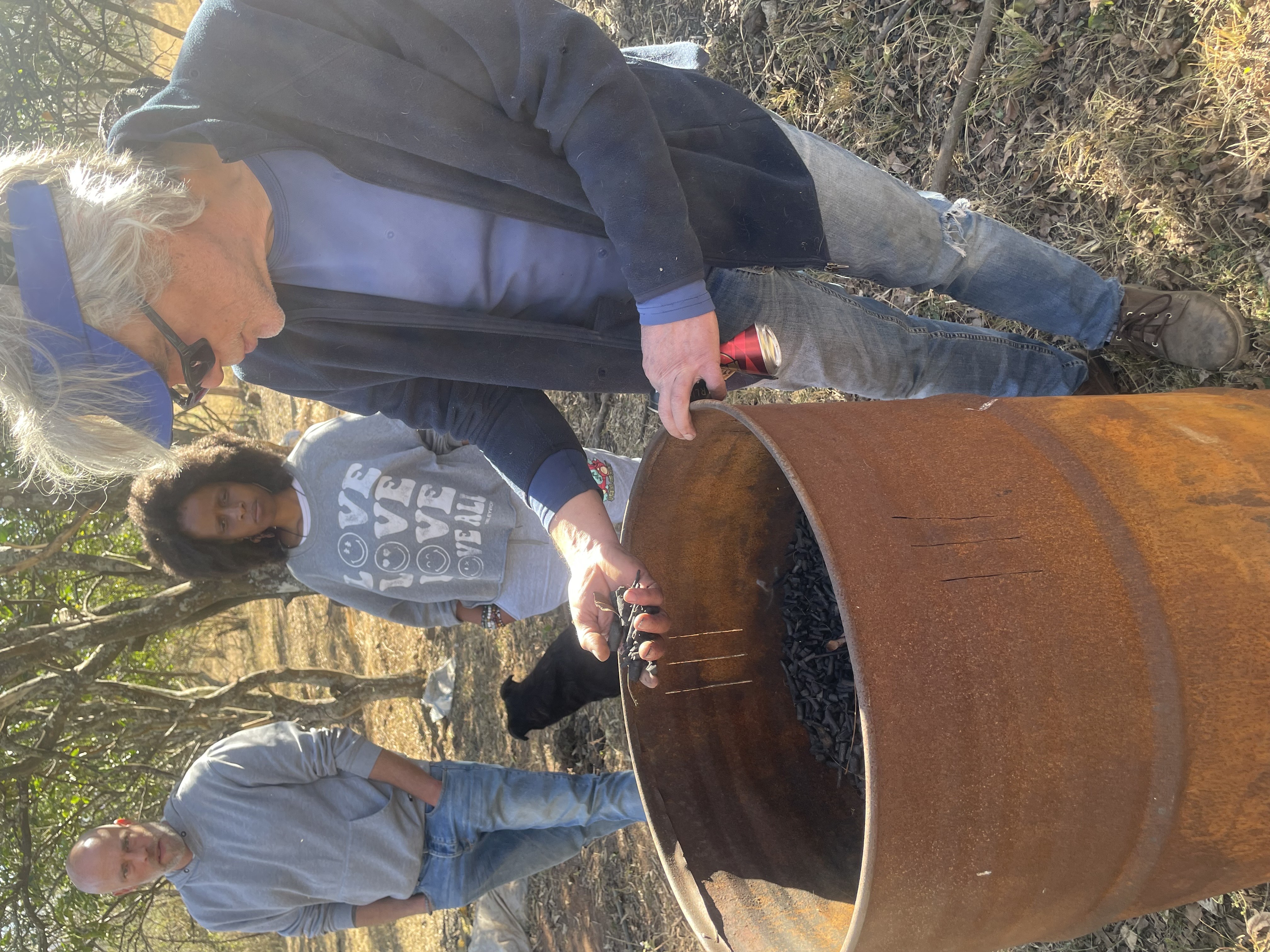
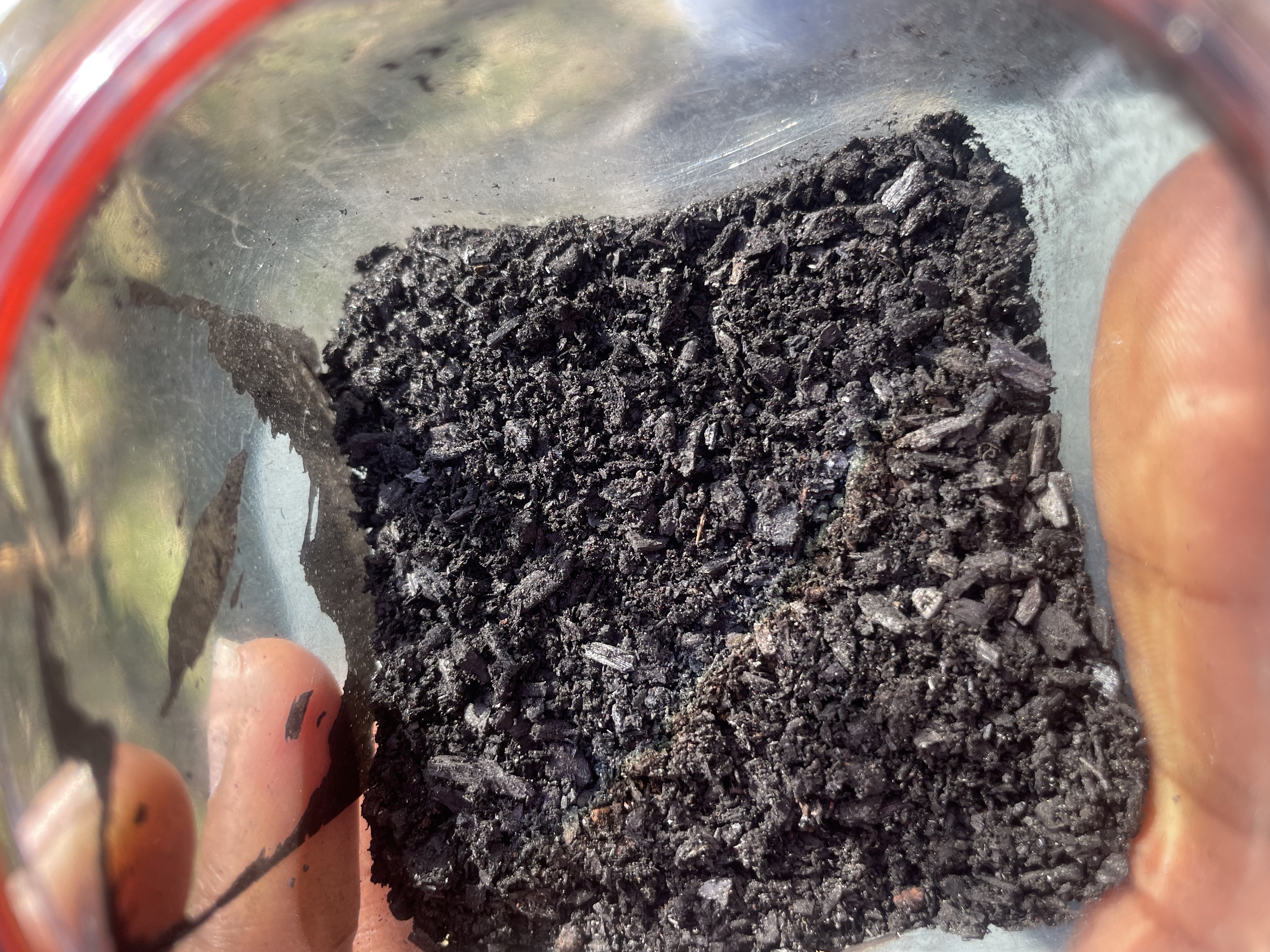
Philip led us through his large, expansive garden, with mountains rising behind it like ancient guardians. He then took us into his biochar shed, where he demonstrated his process with the enthusiasm of someone still enchanted by the work. Standing beside barrels and steaming piles of carbonised biomass, he looked like an inventor in his element—part scientist, part farmer, part ecological philosopher. His passion was unmistakable as he explained how biochar can restore soil health, retain moisture, and revive landscapes damaged by decades of monoculture forestry.
Shared Food, Shared Stories
We ended the afternoon around a traditional South African braai, with Philip’s wife and two sons hosting us with genuine warmth. Freshly baked bread, roasted chicken, and easy conversation made the visit feel less like a meeting and more like a homecoming.
It was during this time when Carol Nkalanga from CarBen Investments took the lead. Carol’s insights were grounded in her experience with the Social Employment Fund (SEF) and her work with mining communities in Mashoboto, including the complex realities of zama zamas (illegal miners) affected areas.
Her perseverance and grounded leadership reminded us that regeneration is not only ecological. It is deeply social, rooted in dignity, safety, and community resilience.
.jpeg)
A Quiet Realisation on the Drive Back
Our visit to Philip’s home was more than a field stop. It was a reminder of what regeneration truly means and of the importance of looking beyond the surface.
As we drove back, the long stretches of monoculture plantations we once admired as children seemed different now. What had been symbols of industrial perfection suddenly carried a more sobering weight: the cost of uniformity, the quiet violence of ecological depletion.
Yet in the midst of these factory forests, there are people like Philip who serve as custodians of memory and repair whose work begins with seeing clearly what we once overlooked. And his quiet persistence shows us that healing the land starts with paying attention, asking new questions, and choosing a different way forward—however coarse and difficult it may be.